First Aid vs BLS in Riyadh: Which Course Should You Take?
If you are comparing First Aid vs BLS in Riyadh, you may be wondering which course fits your goals. The names sound similar, and some skills overlap, but the courses are designed around different emergency response needs.
First Aid is a broad introduction to recognising and responding to injuries and sudden illness. BLS focuses more closely on the immediate response to cardiac arrest, breathing problems and a blocked airway, including CPR and the use of an automated external defibrillator (AED). The best choice depends on where you work, the situations you may face and any certificate your employer requires.
This guide explains the difference so you can ask the right questions before enrolling in Riyadh.
First Aid vs BLS at a glance
| Question | First Aid | Basic Life Support (BLS) |
|---|---|---|
| Main focus | A broad range of common injuries and medical emergencies | Critical breathing and cardiac emergencies, CPR, AED use and airway response |
| Typical learners | Parents, teachers, office staff, community members and workplace safety teams | Healthcare staff, first responders and people whose roles require BLS skills |
| Example topics | Recognising an emergency, bleeding, burns, injuries and responding while help is on the way | Recognising cardiac arrest, CPR, AED use, choking response and coordinated team action |
| CPR and AED | May be included in a combined First Aid/CPR/AED course; check the exact syllabus | Core elements of BLS training |
| Best starting point | You want broad preparedness for home, school or work | You need focused life support skills or your employer specifically asks for BLS |
Course outlines differ between providers. Always check the current syllabus, practical assessment and certificate details before you register.
What is a First Aid course?
First Aid is the immediate help given to someone who is ill or injured before professional medical care is available. A course teaches you to recognise when something is wrong, assess the situation safely, call for appropriate help and provide care within the limits of your training.
Depending on the programme, First Aid training may cover injuries such as cuts, bleeding and burns, as well as sudden medical problems and choking. Some providers combine First Aid with CPR and AED training; others offer those components separately. That is why the course name alone does not tell you everything you will learn.
At Skills Zone Training Centre, the First Aid Course in Riyadh emphasises practical learning and emergency scenarios. It is an option for individuals and organisations that want to improve their readiness for incidents at home, at school or in the workplace.
Who should consider First Aid training?
First Aid is a sensible starting point if you are a parent or caregiver, work in a school, office, retail setting or other public-facing role, or simply want to feel more prepared when someone needs help. Employers arranging general safety training for a team may also want a broad First Aid course. If training is required for your job, confirm the precise course and certificate your organisation accepts before booking.
What is Basic Life Support (BLS)?
Basic Life Support is focused on emergencies in which a person may not be breathing normally, has suffered cardiac arrest or has an obstructed airway. BLS training develops the ability to recognise the problem, activate the emergency response system, perform CPR, use an AED and work effectively with other responders. It is commonly associated with healthcare and first responder roles, though other learners may also take it.
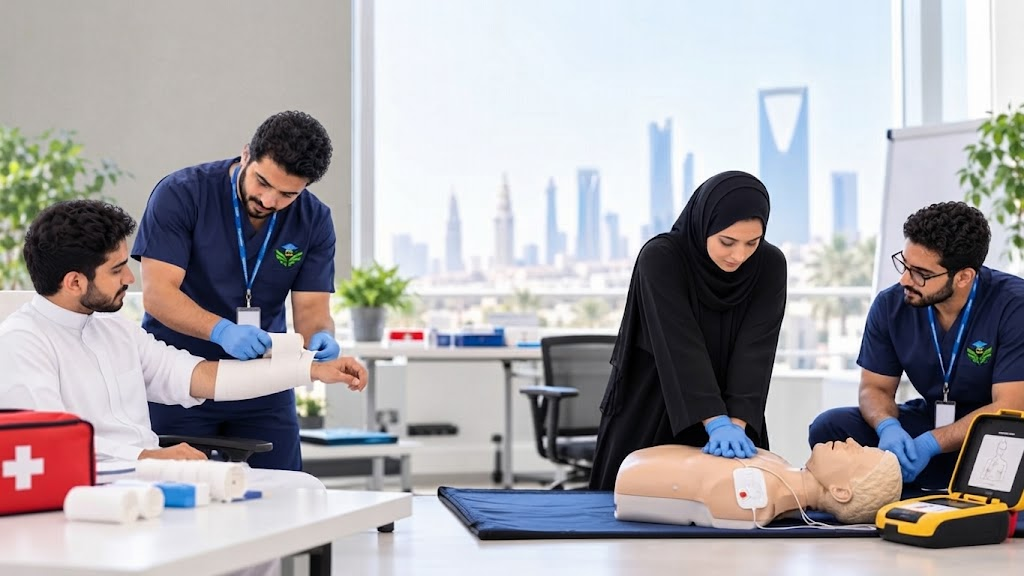
The BLS Training course in Riyadh at Skills Zone describes hands-on practice, AED training, choking response and simulations involving adults, children and infants. If you work in patient care, ask which BLS course and certificate your employer or professional body requires before enrolling.
Who should consider BLS training?
BLS may be the better fit if you are a nurse, doctor, healthcare assistant, emergency responder or student preparing for a clinical placement and your role calls for BLS. It may also suit people who want concentrated, practical training in CPR, AED use and response to breathing emergencies.
What is the main difference between First Aid vs BLS?
The clearest difference is breadth versus focus. First Aid aims to prepare you for many kinds of illness and injury. BLS concentrates on the first, time-sensitive actions in cardiac and breathing emergencies.
For example, a workplace First Aid learner might need to know how to recognise an injury, seek help and respond to a range of incidents until medical professionals arrive. A BLS learner practises a more specific response to cardiac arrest or an obstructed airway, including CPR and AED use.
The courses are complementary. Taking BLS does not automatically mean you have learned how to respond to every injury covered in a broad First Aid course. Equally, a First Aid certificate does not automatically satisfy a job requirement for BLS. The exact curriculum and certificate matter more than the course label.
Does a First Aid course include CPR and AED training?
Sometimes. Combined First Aid/CPR/AED programmes are common, but you should not assume every First Aid course includes practical CPR and AED assessment. Ask the training centre whether these skills are included, whether you practise them in person and what is stated on the certificate.
If your employer has asked specifically for BLS, a combined First Aid/CPR/AED course may still be a different qualification. Share the requirement with the course provider before paying or enrolling.
Which course should you choose in Riyadh?
Choose First Aid if you want broad everyday preparedness
If your main goal is to be better prepared for injuries and sudden illness at home, school, work or in the community, begin by reviewing the Skills Zone First Aid course. Check whether the current session also covers CPR and AED skills if those are important to you.
Choose BLS if your role requires focused life support training
If you work in healthcare or have been told to obtain a BLS certificate, review the Skills Zone BLS course. Confirm the issuing organisation, delivery format, practical skills assessment and certificate validity against your employer’s requirements.
Consider both if your responsibilities are wider
Some people benefit from broad First Aid knowledge as well as focused BLS skills. A healthcare worker, caregiver or workplace responder may face more than one type of emergency. If you are unsure, describe your role to the training team and ask which course or combination covers your needs. Learners planning a wider care career can also explore Skills Zone’s health and social care courses.
Five questions to ask before you book
- What exactly will I practise? Ask for the current syllabus and whether CPR, AED use, choking response and injury care are included.
- Is there hands-on training and assessment? Practical skills are especially relevant if you need to demonstrate competency for work.
- Who issues the certificate? Confirm the certificate name, issuing organisation and validity period. If a workplace or licensing body has a particular requirement, check acceptance with that organisation directly.
- Who is the course designed for? A general First Aid session and a healthcare-focused BLS session may assume different levels of experience.
- What are the current schedule, fee and location? These details can change. Request the latest information rather than relying on an older article or social post.
First Aid vs BLS: FAQs
Is BLS the same as First Aid?
No. They overlap in emergency response, but First Aid is broader and BLS concentrates on cardiac, breathing and airway emergencies. Compare the actual course outlines to see precisely what each one includes.
Do I need medical experience to learn First Aid?
Generally, First Aid courses are designed for people from many backgrounds, including those with no clinical experience. Ask about any entry requirements for the specific course you want to take.
Can someone outside healthcare take a BLS course?
Often, yes. People outside clinical roles may want to learn BLS skills. Check the provider’s entry requirements and whether a general First Aid course or a BLS course better matches your goal.
Which certificate should I get for a healthcare job?
Use the exact wording in the job, employer or professional body’s requirements. If it says BLS, verify the accepted certificate and issuer before you book. Do not assume that any First Aid, CPR or BLS certificate is interchangeable.
How long does First Aid or BLS training take in Riyadh?
Duration varies by syllabus, provider and delivery format. Ask Skills Zone for the current timetable and whether assessment is included in the session.
How often do I need to renew my certificate?
The certificate’s validity and any renewal requirement depend on the course and the organisation that accepts it. Check the current certificate details and your workplace policy rather than assuming one renewal interval applies to every programme.
Find the right course at Skills Zone in Riyadh
The right training is the one that covers the situations you may face and meets any formal requirement attached to your role. If you want broad emergency preparedness, start with First Aid training. If you need focused CPR, AED and airway response skills, explore BLS training.
Ready to choose? Contact Skills Zone Training Centre to ask about the current syllabus, certificate, schedule, and availability in Riyadh.